
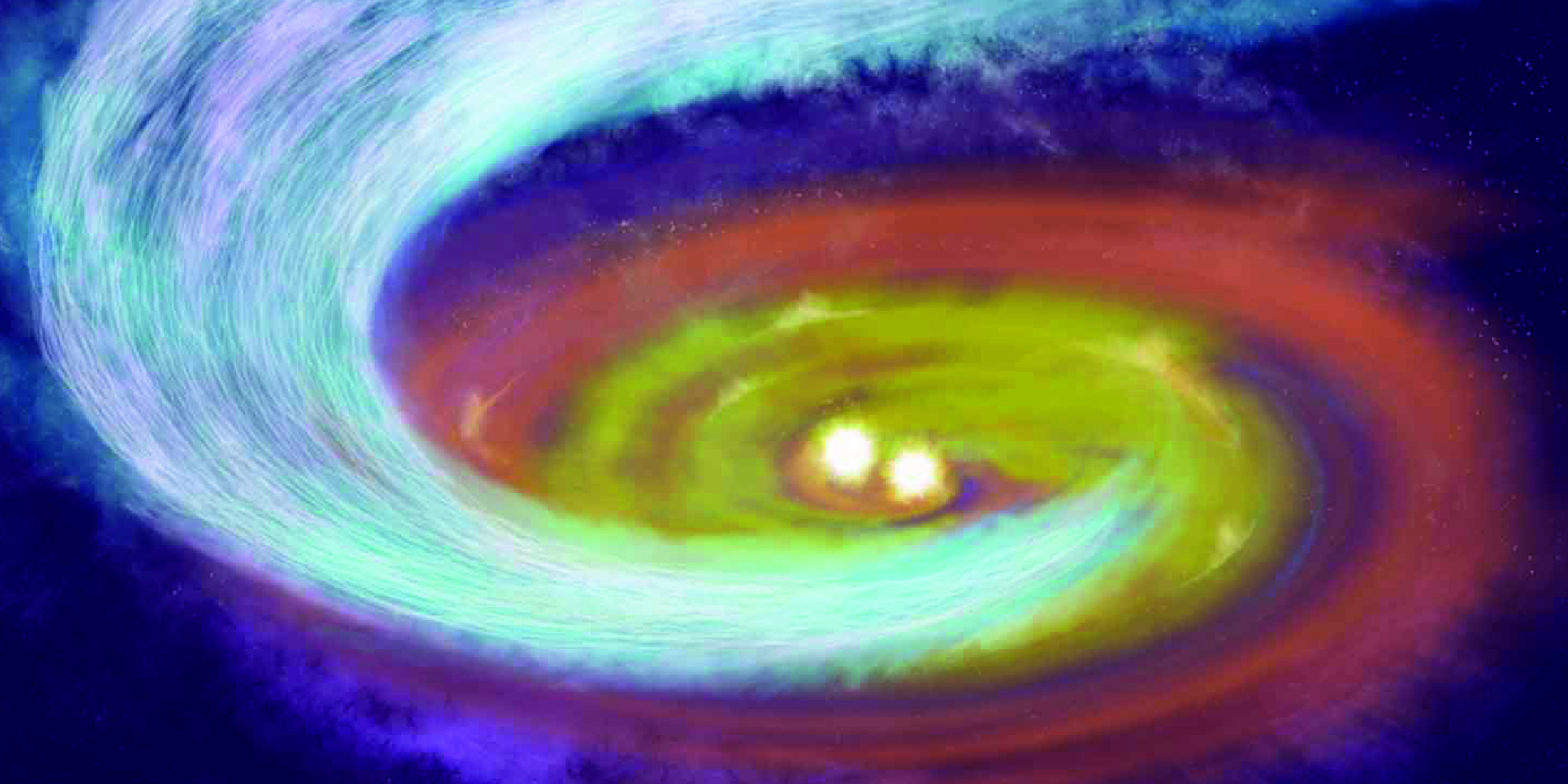
Flows of interstellar material can feed the disks of gas and dust around newly born stars. These flows, known as streamers, change the chemical and physical properties of the disk, and affect the way in which disks form planets. Using the NOEMA interferometer, a group of astronomers has characterized the physical and chemical properties of such a streamer, in great detail.
The processes through which stars form have been the subject of intense research for decades. When they are born, protostars are surrounded by disks rich in gas and dust, called protoplanetary disks, which are known to be the cradle of future planets. During these early stages, protostars and their disks are also surrounded by thick cocoons of dust and gas called protostellar envelopes. Accretion streamers transport material from the envelopes to the inner regions of the disks. However, how streamers affect the physical and chemical evolution of these protostellar-disk environments remains poorly understood.
Using the high-angular resolution and high sensitivity of NOEMA and the IRAM 30-meter telescope, a team from IPAG-OSUG, and IRAM, led by Maxime Tanious, investigated an accretion streamer feeding the young protoplanetary disk around the gas- and dust-rich protostar L1489 IRS to quantify its impact on the disk (Tanious et al. 2024, 2025).
The results show that the streamer is particularly massive and could supply the material that builds the outer disk around L1489 IRS and could have even replenished it several times. The streamer also alters the chemical composition of the disk by bringing fresh material from the protostellar natal environment, i.e. material not yet affected by the protostellar activity. This establishes a direct link between the chemistry of the interstellar medium and that of the regions where planets are born.
These results open up a new window on the role of streamers in the formation and evolution of protoplanetary disks. In particular, the authors highlight how these flows of matter transfer material, likely of interstellar origin, to those regions where planets are born. This research thus contributes to a better understanding of the chemical evolution of planetary systems and to a re-examination of classical models of star formation.
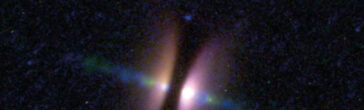
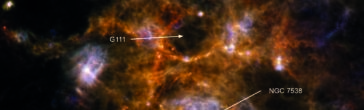
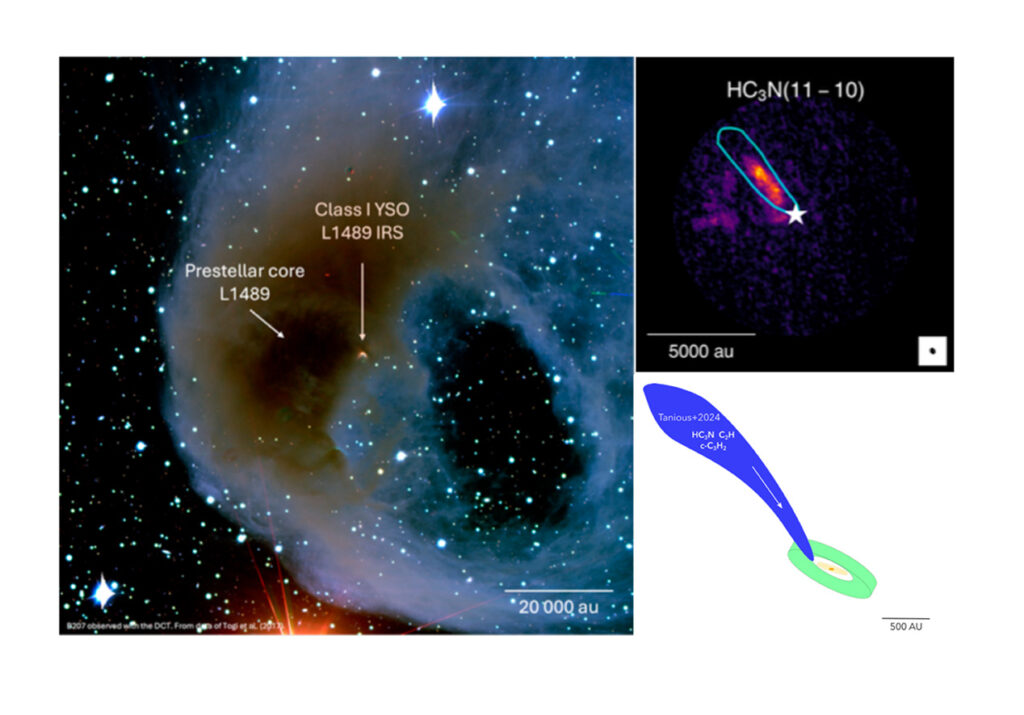 Left: Composite image of the protostar L1489 IRS and its nearby prestellar core L1489, within the parental cloud Bernard 207. Blue green and red colors represent observations carried out with the Discovery Channel Telescope in the V, R and I bands, respectively (Togi et al. 2017).
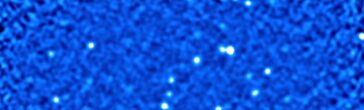
Top Right: Emission of the molecule HC3N mapped toward L1489 IRS using the NOEMA interferometer and the IRAM 30-meter telescope. The accretion streamer connecting the protostar to the nearby prestellar core is marked in cyan.
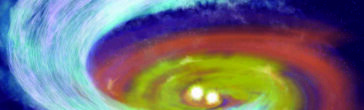
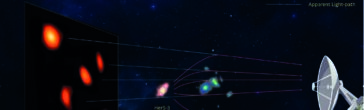
Bottom Left: Simplified sketch of the streamer hitting the inner disk of L1489 IRS. Adapted from Fig 3 of Tanious et al. 2024.
Read more :
Tanious et al. 2024, A&A, 703, A244, 18 pp
Tanious et al. 2025, A&A, 687, A92, 26 pp
Our latest updates
Explore all the latest news from our research and technology groups and never miss out on important upcoming events.