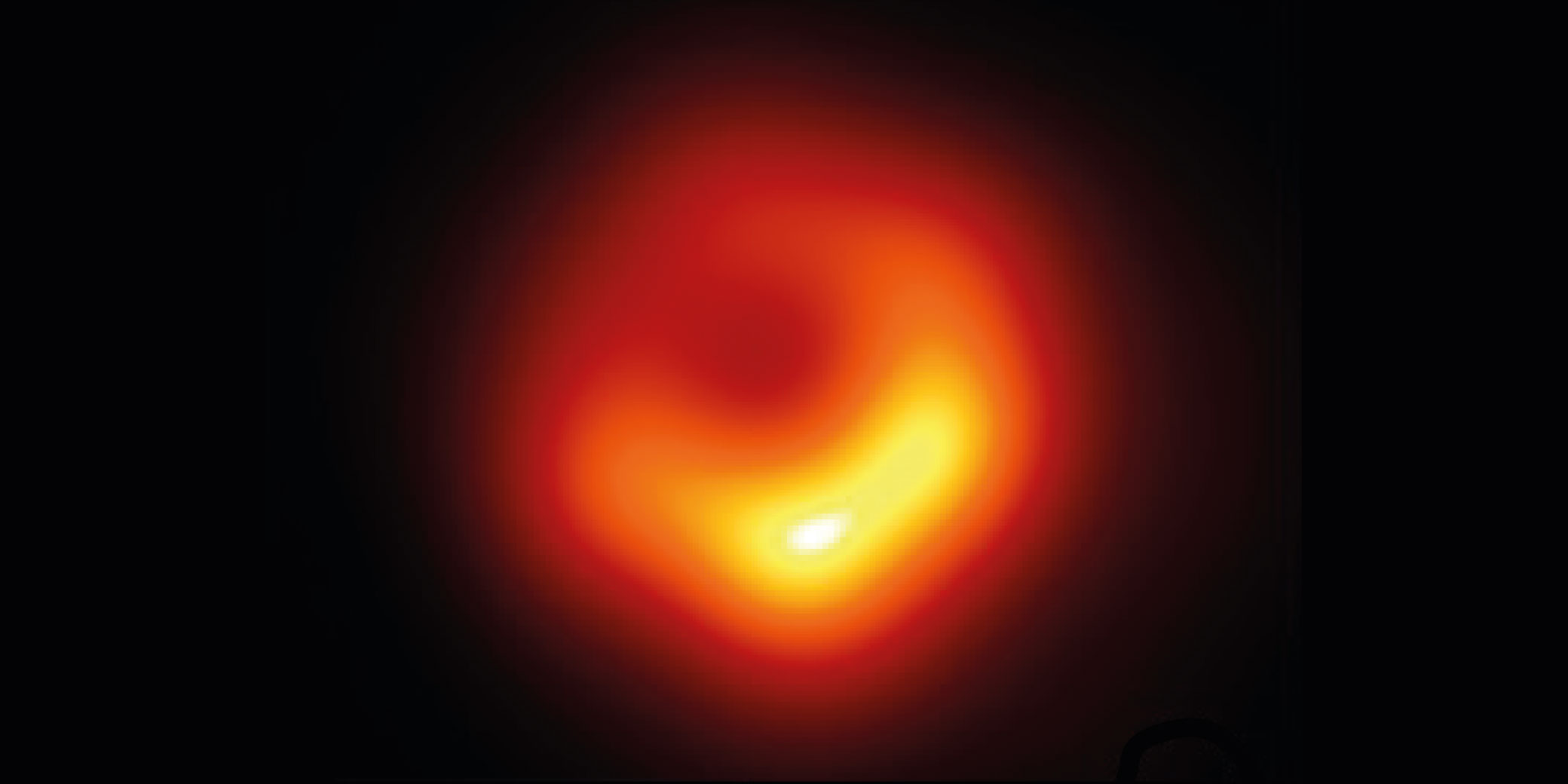
The Event Horizon Telescope (EHT) Collaboration, with participation from IRAM’s observatories in France and Spain, has unveiled a first-look image of M87* from its 2026 monitoring campaign. Produced and scientifically validated in record time, the image paves the way for tracking how matter evolves close to a black hole.
During its 2026 monitoring campaign, the global network of radio telescopes observed M87*, the supermassive black hole at the center of M87, approximately twice a week over 2 months. With NOEMA and the 30-meter telescope, IRAM provided two of the most sensitive stations in this experiment. The campaign comprised 18 observations aimed to track the motion and evolution of plasma around the black hole at a cadence matched to its expected variability.
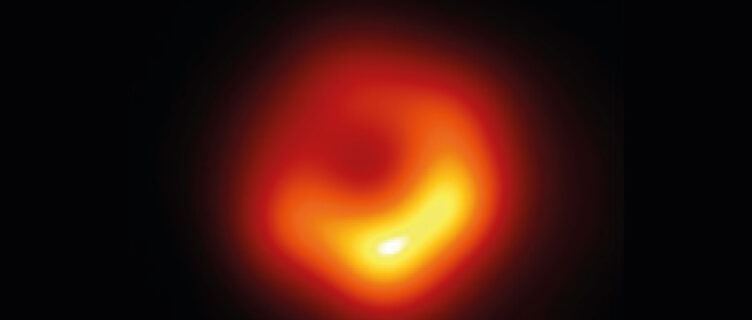
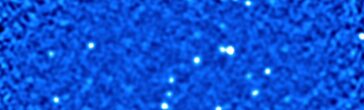
A first snapshot image from this monitoring campaign, reconstructed from just four minutes of observations on April 3, 2026, revealed the dramatically increased sensitivity and completeness of the EHT. Another major breakthrough is the speed at which results can now be delivered. Coordinated improvements in network operations, data transport and processing have reduced the time between observation and the production of a scientifically validated image from years to months.
This progress opens the door to studying how matter moves and evolves close to a black hole, where conditions are among the most extreme in the Universe. The full 2026 campaign is expected to provide an unprecedented time-lapse view of the environment around M87’s black hole.
With NOEMA and the 30-meter telescope, IRAM is contributing to the worldwide EHT network, from the first image of a black hole, unveiled in 2019, to a forthcoming sequence of images revealing how its surroundings evolve over time.
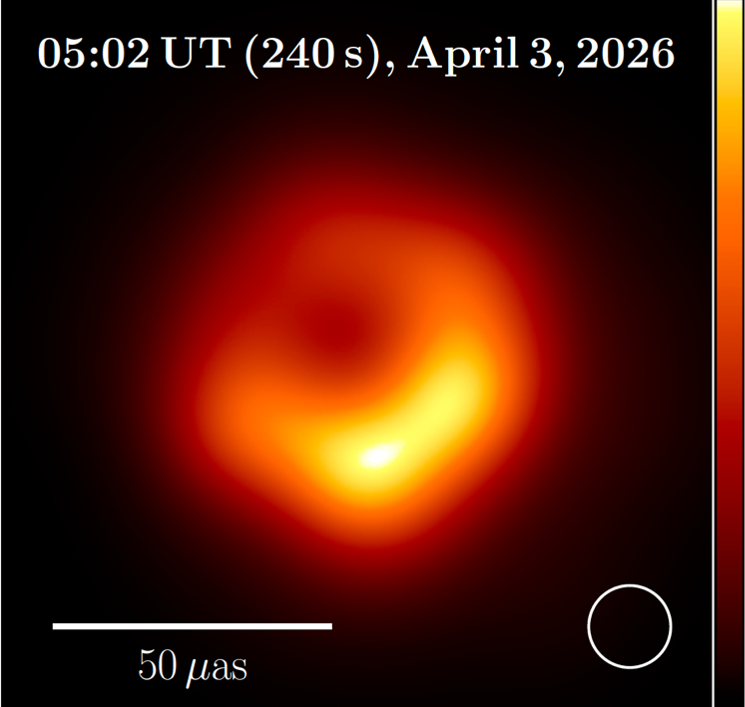
First-look image of M87*, the supermassive black hole at the center of galaxy M87, reconstructed from a single four-minute observation on April 3, 2026. The bright ring surrounds a central dark region associated with the black hole’s shadow. Credit: Event Horizon Telescope Collaboration (2026).
Read more:
https://iopscience.iop.org/article/10.3847/2515-5172/aebd91
Our latest updates
Explore all the latest news from our research and technology groups and never miss out on important upcoming events.